












PREVIOUS PAGE
NEXT PAGE


WEREBEASTS
MAGICAL ALIGNMENT: Dark, but with no magical
abilities, a werebeast does not follow a particular sin.
TRANSMISSION: Much like vampirism, therianthropy and herpetanthropy* are transmissible via venom-filled saliva entering the bloodstream. Unlike vampires, werebeasts must make the conscious choice to infect someone.
It is incredibly difficult to transform other magical fauna, and impossible to turn beings of the light.
LIFESPAN: Werebeasts possess an immune system identical to that of a human, and despite their enhanced metabolisms, this means that they age at a similar rate, if not slightly faster. Their lifespans (on average, 60-90 years) are not quite up to par with humans due to this, and due to an increased rate of certain cancers in werebeasts.
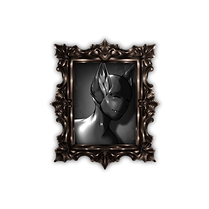
APPEARANCE: The appearance of a werebeast varies hugely depending on their feratype, the animal species which they are cursed to transform into. A werewolf, for example, will have wolf-like ears, the tail of a wolf, and, rarely, patches of fur spread across the body.*
All werebeast feratypes are mammals or reptiles large enough and predatory enough to cause harm to humanoids. Most commonly, these species are carnivores, though this is not a requirement. The majority of werebeasts are wolves, other canines or members of the panthera genus.

*Herpetanthropy is a type of therianthropy in which the cursed feratype is a reptile, most commonly crocodiles and alligators.

*A turned werebeast is visually indistinguishable to those born cursed.

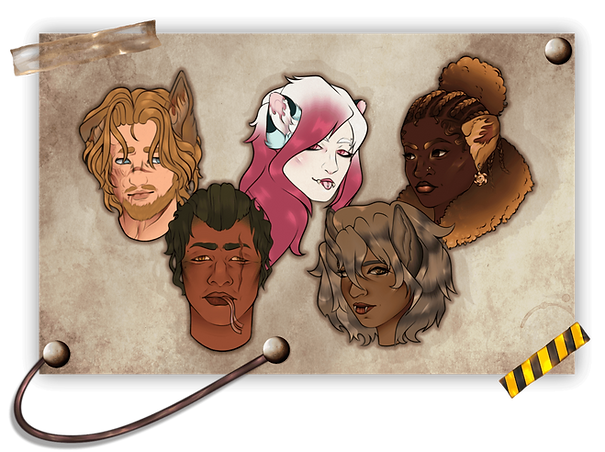
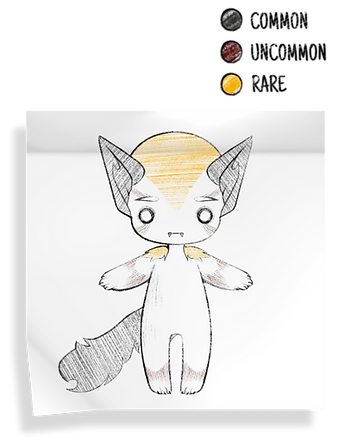
More uncommon or even rare features of a werebeast include:
- Unusually coloured hair. More often than not, a werebeast's natural hair colour matches their fur. As fur colourations are not limited to those seen in the natural world, a werebeasts hair could be any colour of the rainbow.
- Unnaturally coloured, animalistic eyes.
- Teeth closely matching those of
their feratype.
- A facial crest.
- Patches of fur across the body.
- Patterns or markings on the skin.
A werebeast’s height and build is also altered by their animalistic features. Though a werewolf is almost always an average height, a werebear may be much larger (7-7.5 feet) and a werewolverine much smaller.
ABILITIES: All werebeasts are non-magical, and instead possess the ability to transform into a horrifying beast form. This altered form gives them a few extra feet in height, a thick coat of fur, and closely resembles the animal they are merged with, if a little exaggerated. In this state, their cognitive ability is dampened significantly. Their focus is almost solely on hunting and destruction, unless mastery of this transformation is achieved, something that comes with practice and patience.
Once transformed, a werebeast possesses an incomprehensible level of strength, able to lift a car with ease. They have been known to destroy entire buildings if not properly contained.



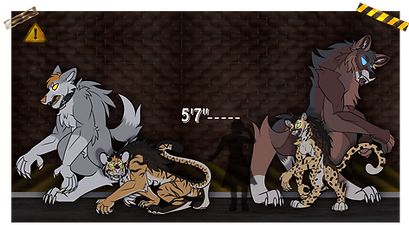

Art by sabortoof_teegar
OVERALL BIOLOGY:
Having a much faster metabolism than other humanoids means that a werebeast possesses an increased muscle mass, and a larger stomach.
They find it much easier to both gain and lose weight, and to gain muscle with little exercise. All varieties of werebeast have scent glands that are not present in other humanoids, an enhanced sense of smell, and incredible low light vision. Their strength, speed and regenerative qualities are unmatched, and their reflexes impressive. They almost always also possess retractable claws in place of nails.
Almost all werebeasts, male and female, follow some kind of transformation cycle. The timeline of this cycle varies massively, but for werewolves, this seems to follow the moon cycle. It is a common myth that the full moon will cause full transformation in a werewolf - it is correlation, not causation. Shortly before their transformation, a werebeast may need to avoid their usual meat-heavy diet, as the scent of blood or meat may trigger a rather painful early transformation.
These traits are all also present in turned werebeasts, but can take weeks to months to fully develop. The transformation is much less quick and violent than vampirism or coulrothropy.

DIET: A werebeast’s diet once again reflects that of the animal they are able to transform into, with the majority being facultative carnivores. Some werebeasts, however, are strictly herbivores, or strictly carnivorous. Some are happily omnivorous. No matter the animal, a werebeast’s daily calorie intake is significantly higher than that of a human’s, especially during their transformation cycle.
SLEEP/REST: The rest requirement, again, varies from subspecies to subspecies, but generally speaking, werebeasts do not require as much sleep as a human would. During the peak of winter, however, some werebeasts may choose to ‘hibernate’, taking time away from their responsibilities to rest and heal, especially if they are feeling under the weather or currently pregnant.


REPRODUCTION:
Werebeast reproduction is arguably one of the most unusual amongst magical fauna. Each subspecies follows its own unique ovulation and gestation cycle, and the majority of subspecies are incredibly prone to giving birth to multiples. They face very little reproductive health issues, and unlike other humanoids, do not go through any sort of menopause until they are close to death.
Werewolves in particular are very prone to giving birth to multiples. It is almost unheard of for a werewolf to have a singular pup, almost always producing multiples of two, with cases of six or even eight pups being born in extremely complex cases.
As the genetics determining sex operate differently in werebeasts, it is common for near identical multiples of different sexes to be born. A werebeast’s menstrual cycle closely follows their transformation cycle in female werebeasts, as it is the same hormones that cause this forced transformation. This means that some werebeast’s cycles may be once a month, once every six weeks, or even once a year depending on the subspecies.
HYBRIDISATION:
There are a select few species that a werebeast can hybridise with fairly easily. These include: dragonborns, coulrobans, silicans, gyels, and magmar.
Other, less common hybrids:
- A demon and werebeast combo has a 45% chance of producing a werebeast, a 45% chance of producing a demon, and a 10% chance of combining the two.
- A werebeast and animalfolk pairing has an incredibly small chance of producing a hybrid.*
A werebeast cannot 'blend' with another feratype - the outcome will always be the feratype of one of the parents.

*A canine werebeast and a demon or magman
hybrid is known as a 'hellhound'.

*All werebeast hybrids possess dark mana.

SEXUAL DIMORPHISM:
Werebeasts tend to follow the biology of their merged animal, and their sexual dimorphism reflects that. A werelion (werecat) may have a mane when transformed if they are biologically male, for example.
CHILDHOOD AND DEVELOPMENT:
In infancy and toddler-hood, werebeasts develop incredibly quickly. They often learn to crawl and speak basic words by six months old, and are quick to begin their reign of terror. Teeth also appear within the first few months of life, and a werebeast toddler tearing up furniture is a common occurrence.
All werebeasts experience a rather aggressive and accelerated puberty due to their transformations, and the hormonal rush that comes with them.*
ORIGIN: Therianthropy is believed to have originated as a curse created by human spellcasters.
CULTURE:
Family structure is incredibly important to werebeasts, and what exactly this looks like differs between subspecies. Whether this is a pack, pride, or small family unit, werebeast families stick together closely, and have an abundance of respect for their elders. These familial units are not always limited to blood family, adoption and found-family dynamics are incredibly common, especially in werewolf packs.
As family and lineage is often incredibly important to werebeasts, a common theme with their names is reusing or slightly altering the names of deceased loved ones. Family surnames are incredibly valued, too. Some werewolf packs or werelion prides once spanned worldwide, leading to incomprehensibly large family trees and a wide range of ethnicities.
It is tradition to keep heirlooms from werebeasts who have passed, such as a trimming of their fur.

*Rarely, a werebeast may not experience their transformation until their early 20s. This is much more common in males.