










PREVIOUS PAGE
NEXT PAGE





VAMPIRES
MAGICAL ALIGNMENT: Dark, though a pure
vampire does not follow a particular sin.
TRANSMISSION: Vampirism is transmissible via
saliva entering the bloodstream, usually via
a bite. All humanoids can be turned.
LIFESPAN: Born vampires have been known to live anywhere between 300 - 1000 years.
Turned vampires have also been known to live for centuries, but not to the same extreme. With weaker immune systems and less durability, they are significantly more susceptible to illness and injury.*
APPEARANCE: Vampires as a whole appear almost entirely human with very subtle differences. They have just as much diversity as ordinary humans.
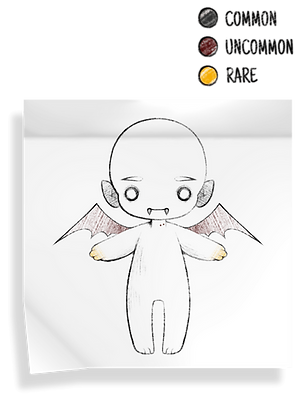
The most notable difference is their lengthened canines, sometimes overlapping the lower lip. Other than the fangs, most vampires feature pale or greyish skin, unnaturally bright eyes and pointed ears.
A rarer but still notable trait in vampires is the darkening or lightening of the skin,
particularly on the fingers and toes.

*A longer lifespan is possible, as born vampires are entirely unaffected by non-magical ailments, but accidents happen.
ABILITIES: Although enhanced strength, speed and wound healing are the baseline for a vampire’s abilities, some may possess other powers. These include telepathy, the ability to become invisible, the summoning of bat-like wings or the ability to transform oneself entirely into a bat.
OVERALL BIOLOGY:
BORN VAMPIRES:
- Very low blood volume: When cut, they rarely bleed.
- Enhanced strength, tolerance to poisoning and radiation.
- Unusually small stomachs.
- Extremely quick cellular regeneration.
TURNED VAMPIRES:
- Do not have the vascular structure to accommodate these sudden changes.
- Dizziness, nausea, frequent fainting and an uncontrollable
anxiety. Transformation has driven many to madness.*



Both forms of vampire, especially turned vampires, lack the relevant melanin production to withstand UV rays from the sun. Though they will not literally “burn up”, it can take less than an hour of sun exposure to burn them, leading to many avoiding sun exposure entirely.
DIET: Vampires are both facultative carnivores and sanguivores, able to live on an omnivorous diet if they absolutely must.
- Vampires require blood to survive. Humanoid blood is preferred, but can be substituted with animal products.
- Blood is extracted using small holes in a vampire's fangs.
- Blood banks can often provide the nutrition that a vampire needs, as hunting innocents is discouraged, running the risk of turning someone.
SLEEP/REST: Sleep is not a required function for both born and
turned vampires, as their quick cellular regeneration is a system
that operates just as efficiently whilst awake.
- Some vampires may choose to sleep just to maintain routine, or
for their mental health. Most do so during the daytime.
- If a vampire chooses to sleep, they may do so in an upside
down position. This allows for better blood-flow to the
brain, and an increase in blood pressure.


*Along with the chance to stunt puberty entirely, turning a youth will more often than not kill them - the change is too drastic for little hearts and livers.
*Turning a humanoid into a vampire before full development is complete is incredibly dangerous and frowned upon. It is punishable by life in prison without a good enough excuse.

REPRODUCTION:
A born vampire experiences no difficulty reproducing, especially with other vampires. Vampiric traits are recessive, and prone to dilution down the line. The average gestation period closely mimics that of a human.
Due to their bodies struggling to function with such low blood volume, a turned vampire will struggle to retain a pregnancy. In order to do so, constant nutrition and rest is required.

HYBRIDISATION: Vampire hybrids are relatively common, especially with animalfolk, werebeasts and harpies. These
hybrids always possess dark mana.
A special mention is needed for wampires, a cross usually between a male vampire and a female werewolf. Wampires are incredibly prone to sickness, and most do not survive infancy.
SEXUAL DIMORPHISM: Aside from the usual human sexual dimorphism, there is nothing special about vampires.
CHILDHOOD AND DEVELOPMENT: There is little to no difference in the development of a human child and a vampire child, with most milestones following the exact same timeline.
CULTURE: Aside from their nocturnal nature, vampires lack distinct cultural differences from humans. For millennia, they have gone mostly unnoticed alongside humans, and are just as versatile when it comes to naming schemes and family dynamics. The majority of born vampires are of European descent, and therefore, proper or “posh” names are common in vampire communities.
ORIGIN: Vampirism is known to have originated as a curse, and spread rapidly worldwide in the dark ages.

Because of their unusually 'sweet' blood, some vampires prefer to drink from dragonborns or silicans.

Vampiric transformation may save someone from death, especially if poisoning or illness is involved.

Due to the aforementioned resistance to toxins, vampires may find it difficult to “get drunk”.
The lethality of garlic to vampires is greatly exaggerated. It is simply a very common allergy within vampire bloodlines.